

Coconut Sugar Caramel
A caramel with deeper notes than one made with white sugar, with no butter and no dairy cream.
Ah, caramel. That essential of pastry, with its handsome amber color, its silky texture and its unmistakable aroma. It is hard to imagine a world of desserts without it.
Caramel crosses the centuries and goes on winning people over. Its history is old, since the first preparations based on caramelized sugar go back several hundred years. The word itself appeared in French in the seventeenth century.
Traditionally, caramel is made by heating sugar until it takes on that golden color and develops its characteristic aroma. With cream and butter added, it becomes the wonderfully generous, melting sauce we all know.
But you know me by now: I love reworking the great classics while keeping what makes them good.
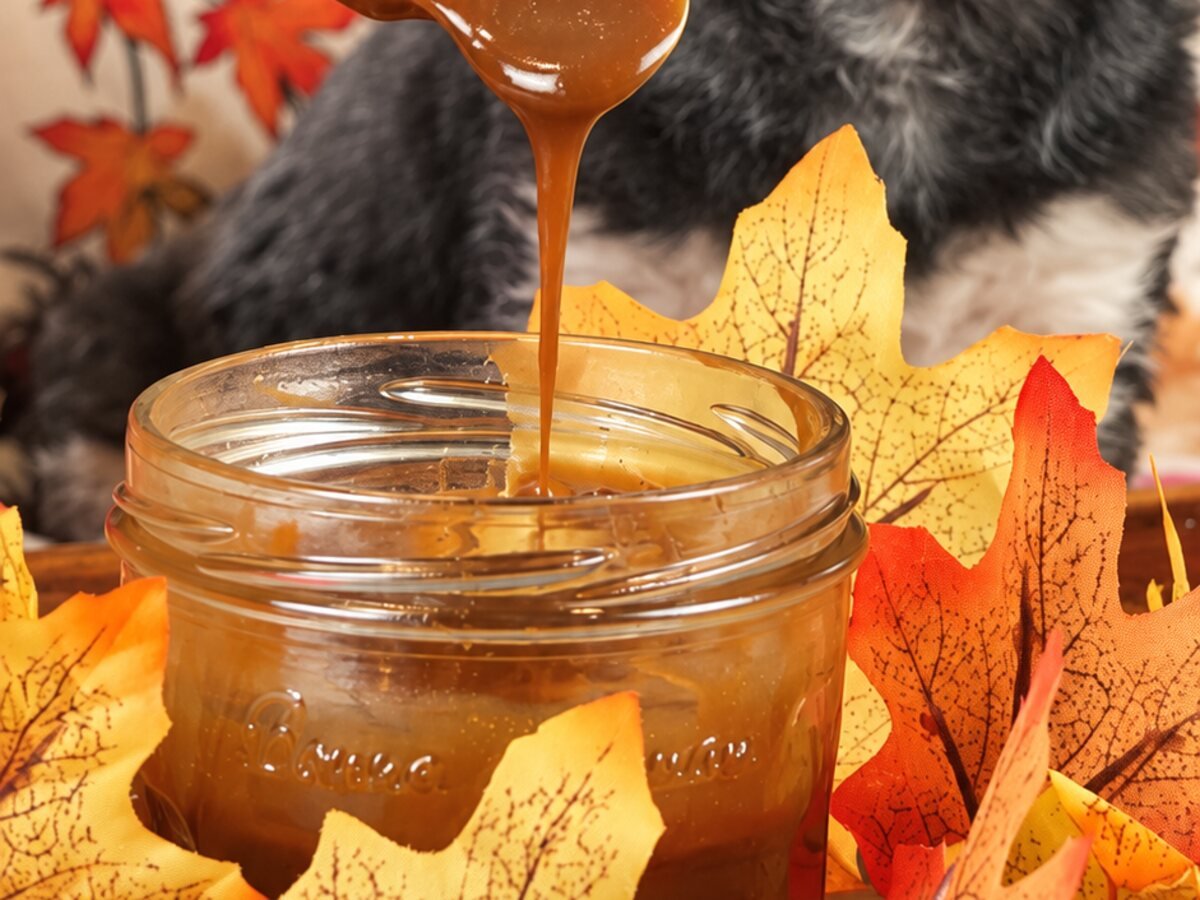
And for this recipe, I chose to give pride of place to a sugar I am particularly fond of: coconut sugar.
Coconut sugar, a sugar with astonishing aromas
Contrary to what the name might suggest, coconut sugar does not come from the coconut itself but from the sap of the coconut palm’s flowers.
That sap is harvested and then heated gently so the water evaporates. It gradually concentrates into a brown sugar with finer or coarser grains, whose color and aroma can vary with how it is made.
And what aromas.
If you have never used coconut sugar, I invite you to try a very small experiment: simply open a bag and take the time to smell it.
You will understand immediately why I so love working with this sugar. It naturally gives off warm, lightly toasted notes recalling caramel, sometimes even with hints of licorice and brown sugar.
It is a sugar with a real personality.
A word of caution: I will not tell you it can replace white sugar in absolutely every pastry. Its aromas are pronounced enough to shift the balance of certain recipes, particularly those where you want to preserve very delicate flavors.
But when it meets the right ingredients, it can be absolutely extraordinary.
And for making a caramel, I find it simply perfect.
And its glycemic index?
You often hear that coconut sugar has a lower glycemic index than white sugar.
Some studies do report lower values, but the results vary and do not allow us to say it systematically has a low glycemic index.
It remains above all a sugar, with an energy content and a carbohydrate load comparable to traditional sugar.
So personally, it is not for its possible nutritional advantages that I use it in baking, but for its aromatic richness and all the possibilities it opens up.
My version, with no butter and no dairy cream
For this recipe I wanted to recover everything that makes a real creamy caramel charming, but in a fully plant-based version.
So I paired coconut sugar with coconut cream and 40 grams of plant-based margarine.
Only a handful of ingredients, but a combination that works wonderfully.
I developed this recipe by moving a little away from the traditional method, while keeping the main principles that make a caramel work.
And the result genuinely won me over.
You find that generous texture, that enveloping richness, that fine brown color and above all that deep flavor so characteristic of caramel.
And if you love salted butter caramel, a small pinch of salt is all it takes for a delicious salted-caramel version — without any butter.
That too is what I love about plant-based pastry: discovering that with different ingredients and a little creativity, you can recover the sensations and pleasures of the great traditional recipes.
And believe me, this coconut sugar caramel has nothing at all to envy in a classic one.
---
If I had to recommend a few preparations always worth having on hand, this coconut sugar caramel would unquestionably be among them.
Because once you have tasted it, you find a thousand occasions to use it.
Picture it simply poured over warm crêpes, crisp waffles, soft pancakes or a good scoop of plant-based vanilla ice cream.
It also goes wonderfully with a chocolate cake, a brownie, a cheesecake, an apple tart, poached pears or a banana bread.
You can also use it to fill cookies, enrich a plant-based pastry cream, flavor a mousse or bring an extra note to your entremets.
And then, the pairing of coconut sugar caramel with peanuts is absolutely irresistible.
The slightly salty, toasted quality of peanuts marries beautifully with the deep notes of coconut sugar. A combination I really encourage you to discover, especially with roasted peanuts or in a reworked Snickers-style dessert.
Personally, I also love the idea of having a small jar of homemade caramel in the refrigerator, ready to turn a very simple dessert into something special.
It is a recipe that asks for few ingredients but gives an enormous amount of pleasure.
And that is exactly what I love sharing with you through Les Secrets d’une Cheffe: approachable, generous recipes that let you discover another way of baking, without giving up pleasure.
I sincerely hope this version wins you over as thoroughly as it won me over, and that it finds a lovely place among your favorite recipes.
As always, I look forward to hearing from you. Do share what you made, your impressions and your ideas for using it on my social media or directly by email. Your messages are always a fine reward.
I wish you good eating, fine discoveries and above all a great deal of pleasure in your baking.
See you very soon for more fully plant-based, gluten-free sweets.
Les Secrets d’une Cheffe
Ingredients
- 125 g coconut sugar
- 80 g plant-based cream (I particularly like coconut), coconut in the original post
- 40 g margarine, 80% fat
- Salt, optional
Method
- 1
Mix the sugar and cream in a saucepan off the heat. Heat over medium, stirring, until it just simmers and everything has dissolved.
- 2
Take off the heat and stir in the margarine until it melts.
- 3
Pour into an airtight jar and keep refrigerated.
Salted variation: once the caramel has cooled, add 1 to 2 g of fine non-iodized salt, or fleur de sel at serving.
Emmanuelle Grillet-Aubert
Original post: see it on Instagram
Did you make this recipe?
Do share it on Instagram and tag me @lessecretsdunecheffe and use the hashtag below. I love seeing what you make.
#lessecretsdunecheffe
Want to go further?
The full courses take you through every move on video, with the recipe sheets and lifetime access.
Discover my video courses